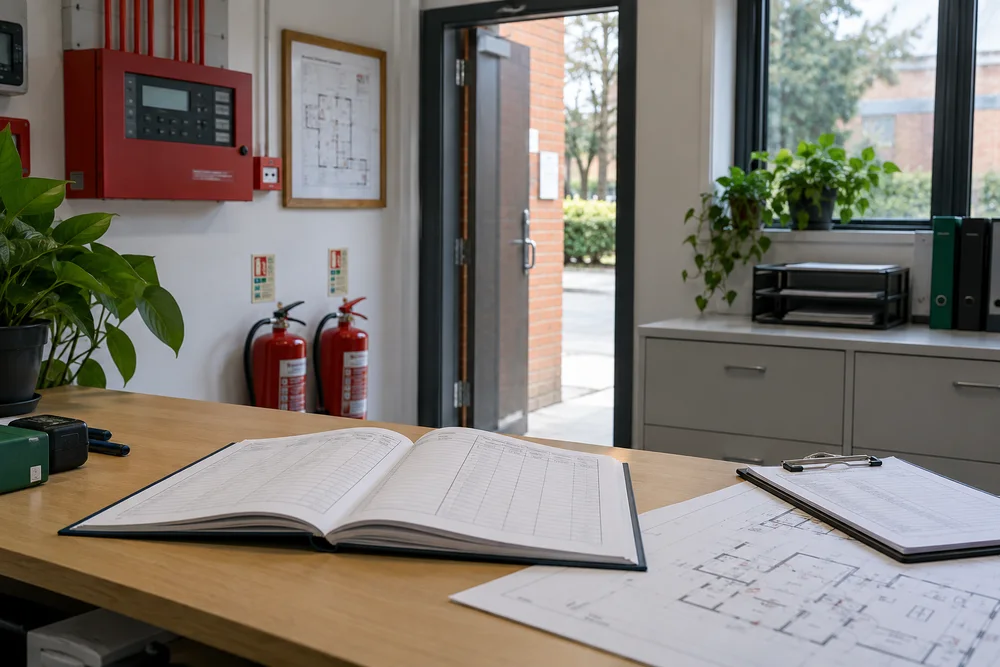
Examine The Management Behind The Measures
A fire safety audit examines how an organisation manages its fire precautions and demonstrates that actions are being followed through. It brings records, responsibilities and working practices together. The aim is to identify gaps between what a policy says, what evidence is available and what people do in the building.
This service can support facilities managers, managing agents, landlords and organisations responsible for several commercial locations. It is useful when taking over a building, preparing for an internal review or checking progress after a fire risk assessment. The audit scope should say whether it includes a site walk, document review or both.
Audit And Assessment Have Different Jobs
A fire risk assessment evaluates the risk to people from fire at the premises and identifies the precautions needed. A management audit examines the systems used to control and evidence those precautions. An audit can highlight the need to update an assessment, but it does not automatically replace that assessment.
Equally, a current assessment does not show that every action has been completed. Audit work follows the evidence behind closure claims, maintenance arrangements and staff instructions. It can uncover a broken handover between a property manager and an occupier even where each holds a separate set of records.
The Duties That Inform The Audit
The Regulatory Reform (Fire Safety) Order 2005 is the principal framework for these commercial premises in England. Relevant duties include assessing risk, maintaining precautions and coordinating where more than one responsible person is involved. Government guidance on Section 156 of the Building Safety Act 2022 explains the expanded recording requirements.
An audit should identify whose management arrangements are being examined. A landlord, tenant and maintenance contractor may each hold different evidence, but a gap cannot be closed simply by pointing to another party. Record the agreed boundaries and identify who can obtain missing information or authorise action.
Records Worth Reviewing
We can examine the assessment, action plan, alarm and emergency-lighting records, door schedules and the emergency plan. Staff instructions, training evidence, drills, contractor controls and arrangements for people needing assistance can also be included. Documents are read for relevance to the current premises rather than accepted because a folder is labelled complete.
Useful questions include whether the latest service report contains unresolved defects and whether those defects appear in the action plan. A record showing that a contractor attended does not necessarily show that the system was satisfactory. The audit should preserve that distinction when summarising management performance.
How The Audit Is Structured
- Agree the premises, management responsibilities, evidence period and audit purpose.
- Request a defined set of records and identify documents that are unavailable.
- Review the evidence and speak with the people responsible for the arrangements.
- Where included, compare the documented procedure with accessible conditions on site.
- Report gaps, priorities and evidence needed to verify completion of actions.
Choose a site contact able to explain how checks are arranged and where faults are escalated. If different teams manage procurement, maintenance and occupancy, involve the people who hold those parts of the process. An audit limited to one folder can miss the information that explains an apparent gap.
Portfolios And Shared Buildings
For a portfolio, agree a consistent evidence structure while retaining building-specific findings. A common policy may be useful, but it cannot describe all the escape arrangements or occupancies across different locations. Keep local action owners and limitations visible within any consolidated reporting.
In a shared building, the audit can examine information exchange between responsible persons. Ask who receives notification of alarm faults, changes to shared routes and contractor work affecting fire precautions. A clear handover matters when a managing agent changes or a new tenant takes occupation.
Scope And Cost Drivers
The cost depends on the number of sites, quantity and condition of records, interview requirements and any site work. Reconstructing an action history from scattered documents involves different work from checking an organised current register. Define the intended report format and whether follow-up verification is included.
An audit is not an enforcement inspection, an insurer’s approval or a certificate that removes legal duties. Its usefulness comes from honest findings and an action plan that management can use. Ask for the evidence standard behind any proposed completion check before agreeing the scope.
Making The Findings Useful
Turn each gap into a specific action with an owner and a way to show completion. That might mean obtaining an outstanding service report, revising a handover procedure or commissioning further assessment. Record what remains uncertain so it does not disappear behind a general status of satisfactory.
Our fire risk assessment Nottingham service explains the premises assessment itself. If the audit shows that the building or its use has changed, our assessment review provides the route to reconsider those conditions.
Service Questions
Is An Audit A Replacement For A Fire Risk Assessment?
A fire safety audit does not automatically replace a fire risk assessment. The audit examines management systems and supporting evidence within its agreed scope, while the assessment evaluates the risk to people from fire. Where audit findings show that an assessment is outdated or incomplete, a separate review or new assessment may be needed.
Can You Audit Several Business Sites Together?
A fire safety audit can cover several business sites through an agreed programme and reporting structure. Each location still needs its own occupancy, responsibilities and findings to be understood. A consolidated action register can help management compare priorities, provided local evidence, inspection limitations and responsibility boundaries remain visible rather than being lost in a portfolio summary.
What If Some Fire-Safety Records Are Missing?
Missing fire-safety records should be declared during audit preparation and recorded as gaps in the evidence. The next step depends on what the document was meant to demonstrate and whether reliable evidence can be obtained elsewhere. Do not recreate historical checks as if they happened, or treat an absent record as proof of satisfactory conditions.